Edgar Morin, Tool and the Cost of Optimising Everything
t's not often that a French philosopher and a progressive metal band arrive at the same conclusion, but that's exactly what I found myself thinking this week. Edgar Morin died recently at the age of 104. Around thirty years earlier, Tool released Stinkfist. On the surface, they couldn't be further apart. One spent a century developing a philosophy of complexity while the other wrote a song that most people initially misunderstood because of its title.
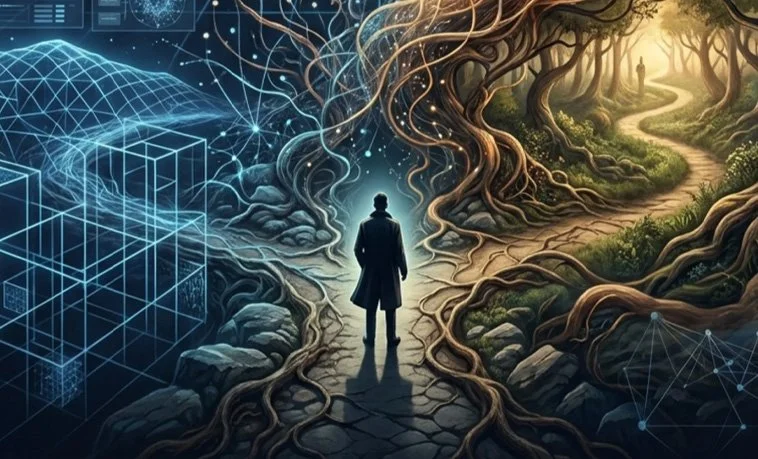
Yet both were wrestling with a similar question: what happens when we lose sight of what actually matters? A conversation with Victoria Ross led me down a rabbit hole on Morin's work. Most people won't know who he was, which is probably because complexity rarely makes for popular headlines. We prefer ideas that can be neatly packaged into frameworks, slogans, dashboards and certainty. Morin spent much of his life arguing that this instinct comes at a cost. His central idea was deceptively simple. The world isn't made up of separate parts & it's made up of relationships between parts. The moment we isolate something from everything around it, we begin to misunderstand it.
A person isn't just a collection of attributes. They're the sum of experiences, relationships, contradictions, memories, hopes, fears and circumstances that continue to shape them over time. Everything affects everything else. Reading Morin reminded me of Stinkfist because beneath the controversy and shock value sat another observation about modern life.The song was really about desensitisation.
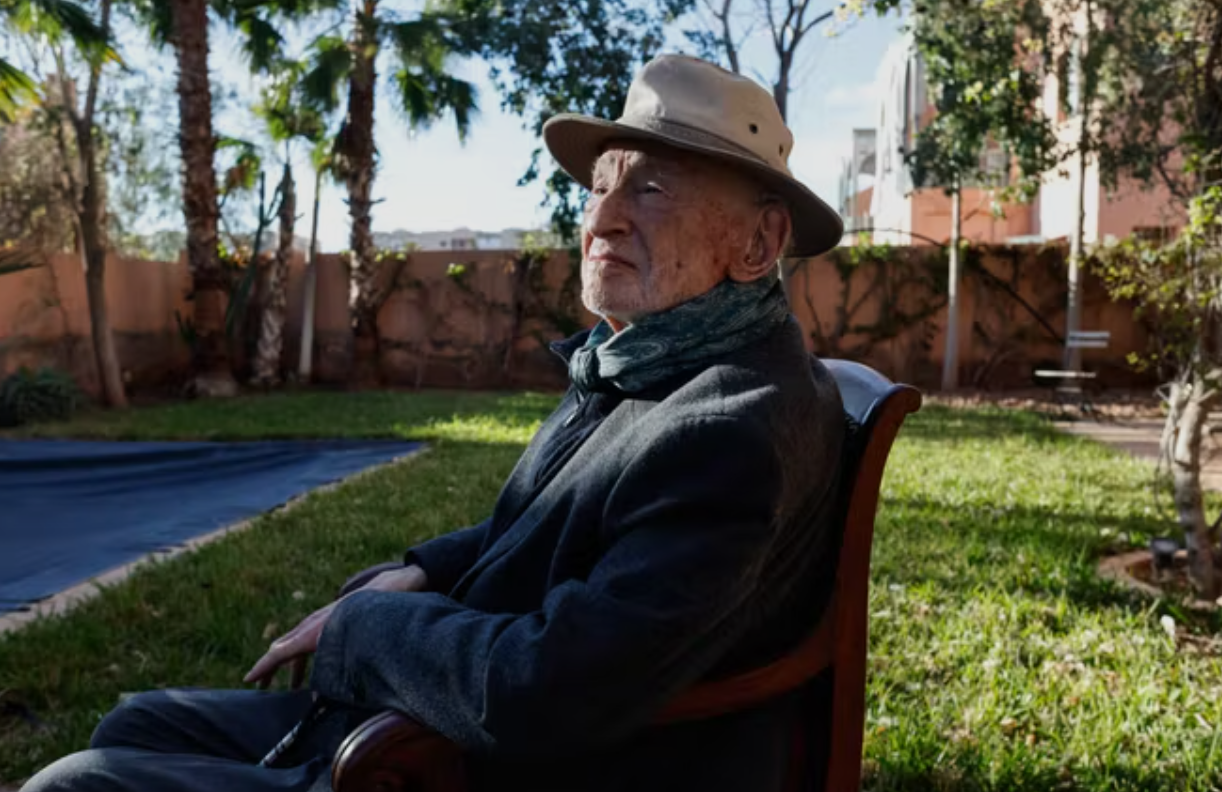
Edward Morin
The idea that constant stimulation eventually stops stimulating. That when everything is louder, faster and more intense, we gradually lose our ability to distinguish what is meaningful from what is merely urgent.Nearly thirty years later, that feels less like a song lyric and more like a description of the world around us.
We're living through an era obsessed with optimisation.
We optimise workflows, content, careers, fitness, relationships and increasingly our identities. We're encouraged to build personal brands, develop unique perspectives and stand out from the crowd. At the same time, we're relying on many of the same tools, the same systems and often the same sources of information to help us do it. I use AI every day and find enormous value in it, but I keep coming back to a question.
If everyone has access to the same intelligence, the same recommendations and the same optimisation mechanisms, what happens to the rough edges that make people different?
What happens to taste? Not taste in the consumer sense, but taste as discernment. The ability to know what resonates and what doesn't. What matters and what doesn't. What happens to judgement? What happens to the strange collection of experiences that causes two people to look at the exact same situation and arrive at entirely different conclusions?
Most of the things that have shaped me haven't come from any form of optimisation.They've come from mistakes, grief, uncertainty, relationships, contradictions, failed jobs, wrong turns and conversations that challenged what I thought I knew. None of those experiences were truly efficient, in fact most of them were incredibly valuable. In many cases, the lessons only emerged because things didn't go according to plan. That's what I find myself returning to in Morin's work. The goal isn't to eliminate complexity, it's to become more comfortable living inside it.
Life isn't complicated because we're lacking information. If anything, we're drowning in it. The reason life feels complicated is that everything is connected to everything else. You can make what looks like a simple business decision and suddenly find yourself dealing with cultural consequences six months later. Those cultural shifts influence behaviour, behaviour affects trust, trust changes relationships and before long you're dealing with outcomes nobody anticipated when the original decision was made.That's the challenge with complex systems. Pull on one thread and you often discover it was attached to ten others.
Technology is becoming incredibly good at helping us process information. It can spot patterns we miss, automate tasks that used to take hours and help us make decisions faster than ever before. What I'm less convinced about is whether it can tell us what actually matters.That still feels like a fundamentally human task that requires judgement, context and lived experience. It requires an understanding that not everything important can be measured, and that some of the most meaningful decisions we'll ever make can't be reduced to a dashboard, a framework or a prompt.
Morin spent more than a century reminding us that complexity isn't a flaw in the system, it is the system. The more I think about it, the more I wonder whether the challenge of the next decade has less to do with preserving intelligence and more to do with preserving diversity of thought, experience and perspective.
Because intelligence is becoming increasingly accessible, wisdom remains stubbornly personal.
As AI becomes more capable, does it amplify human uniqueness? Or does it gradually encourage us toward the same conclusions, the same behaviours and the same ways of seeing the world?